
The Most Common Stinging Insects in Southwest Ohio
Need Same Day Service? We Can Help.
Call Us Now at 283-444-9183.
The Most Common Stinging Insects in Southwest Ohio
Southwest Ohio is home to five stinging insect species that Cincinnati homeowners encounter most often: the Eastern Yellow Jacket, the Bald-Faced Hornet, the European Paper Wasp, the Cicada Killer Wasp, and the Mud Dauber. Of these, Eastern Yellow Jackets and Bald-Faced Hornets account for the overwhelming majority of sting incidents and professional removal calls in Hamilton, Warren, and Butler counties. Knowing which species you are dealing with changes how you should respond — and who you should call.
| Species | Nest Type | Aggression | Peak Season in SW Ohio |
|---|---|---|---|
| Eastern Yellow Jacket | Ground burrow, wall voids, attics | Very high (colony defender) | Aug – Oct |
| Bald-Faced Hornet | Aerial paper nest (gray football shape) | Very high — sprays venom | Aug – Oct |
| European Paper Wasp | Open umbrella comb under eaves, decks | Moderate (less defensive than YJ) | May – Sept |
| Cicada Killer Wasp | Individual ground burrow | Very low (rarely stings humans) | July – Aug |
| Mud Dauber | Mud tubes on walls, eaves | Very low (not colony-defensive) | June – Aug |
Why Cincinnati's Stinging Insect Season Runs Longer Than Northern Ohio
Stinging insect colonies in southwest Ohio grow through spring and summer and reach maximum size — and maximum aggression — in late August and September. The Ohio River Valley's warmer fall temperatures allow colonies to persist two to four weeks later into the season than in Columbus or Cleveland. Yellow jacket colonies that would naturally die off in mid-September in northern Ohio often remain active in Cincinnati until late October during mild falls.
Colony size matters because it determines aggression. A yellow jacket colony in June has a few hundred workers; the same colony in September may have 3,000 to 5,000. Any threat to the nest at that point — a lawn mower, a foot, a dog — triggers an immediate and intense defense response.
Eastern Yellow Jackets: The Most Dangerous Nest in Your Yard
Eastern Yellow Jackets are the stinging insect most likely to cause serious injury to Cincinnati homeowners. Unlike paper wasps, which nest in visible open combs, yellow jackets frequently nest underground in abandoned rodent burrows, inside wall voids, under concrete slabs, and inside attics. Homeowners often stumble across these nests accidentally — mowing over a ground entrance, or probing a void during a home repair — with no warning before stings begin.
Yellow jackets can sting repeatedly without dying, unlike honeybees. A disturbed colony near a ground entrance will send out aggressive defenders within seconds, and a person standing near the entrance when the colony mobilizes can receive dozens of stings before getting clear. This is one of the few pest situations where professional removal is strongly recommended over any DIY approach, especially for nests inside structures.
⚠️ Common mistake to avoid: Night treatment with a can of wasp spray is widely recommended for DIY nest removal, but it is only safe for small, accessible paper wasp nests in open locations. For ground nests, wall voids, or aerial hornet nests larger than a softball, the can's spray range is typically insufficient to fully treat the colony, and a partially treated nest produces an extremely aggressive response the following morning. If the nest is in a wall void or underground and you cannot see the full structure, call a professional.
Bald-Faced Hornets: The Aerial Nest That Looks Like a Paper Football
Bald-Faced Hornets build the large gray paper nests that appear in trees, on eaves, under decks, and in shrubs throughout Cincinnati neighborhoods. These nests start small and inconspicuous in spring and grow to football or basketball size by August, often in a spot that wasn't obvious earlier in the season. Bald-Faced Hornets defend their nests aggressively and are capable of spraying venom at perceived threats near the nest entrance — including the eyes — making these among the most hazardous stinging insect nests to handle without proper protective equipment.
If you spot a large gray aerial nest that was not visible earlier in the summer, do not approach within 10 feet. Wait until winter — when the colony naturally dies — or contact a pest professional to handle removal while the colony is still active if the nest location presents an immediate safety risk.
Cicada Killers: Big, Alarming, and Almost Harmless
Cicada Killer Wasps are the largest wasps most Cincinnati homeowners will ever see — adults can reach 1.5 inches. They hover aggressively near their ground burrow entrances and are commonly mistaken for giant hornets. Cicada Killers are solitary wasps, not colonial insects, and the female almost never stings humans unless physically handled. Males, which patrol and hover near burrow areas, cannot sting at all. The primary nuisance is the burrow damage to lawns and garden beds, not any meaningful sting risk.
Professional treatment is available but optional for cicada killers. If burrow density is high enough to damage a lawn or patio area, a licensed exterminator can treat the soil at burrow entrances effectively.
Frequently Asked Questions: Wasps and Yellow Jackets in Cincinnati
How can I tell a yellow jacket from a wasp?
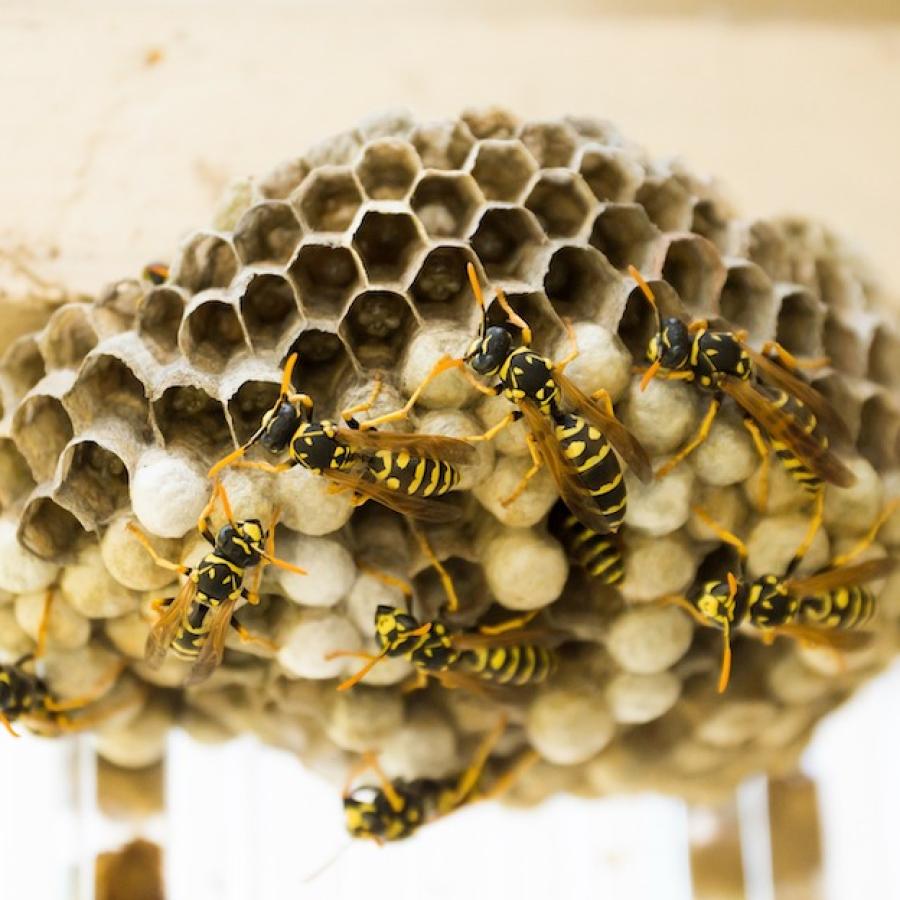
Eastern Yellow Jackets have bright yellow and black banding with a smooth, shiny appearance and a defined waist. European Paper Wasps are longer and slender with orange antennae and papery, elongated wings that hang visibly at rest. Yellow jackets look more "solid" in color; paper wasps look more spindle-shaped. If the insect is flying in and out of a ground hole or wall gap and looks agitated, it is almost certainly a yellow jacket.
Are wasps and hornets still active in October in Cincinnati?
Yellow jacket and hornet colonies in the Cincinnati area can remain active through October during mild falls. Activity slows once overnight temperatures drop consistently below 45°F. By November, virtually all colonies in Ohio have died. Only fertilized queens survive winter, overwintering in leaf litter, soil, or protected wood crevices, and they start new colonies in spring. Nests are not reused year to year.
What should I do if I get stung multiple times?
Multiple stings from yellow jackets or hornets require medical attention if the person has any known allergy to insect venom, or if more than 10 to 15 stings occurred. Even without a known allergy, a high sting count can cause a toxic reaction. Move away from the nest immediately and get indoors. Call 911 if difficulty breathing, throat swelling, rapid heart rate, or dizziness develops — these are signs of anaphylaxis, which is a medical emergency.
Do stinging insect nests need to be removed after the colony dies in fall?
Dead colonies do not need to be removed for safety reasons, but aerial paper nests should be taken down from visible locations on the house — mostly to prevent them from being mistaken for active nests by the next occupants or workers around the property. Ground nests and wall void nests decompose on their own. Nests are never reused by the same species, but yellow jacket queens have been known to recolonize the same general ground area the following season if conditions are favorable.
Found a Nest Around Your Cincinnati Home?
Yellow jacket and hornet nests in wall voids, attics, or under decks are not a safe DIY project. D-Bug Pest Control handles stinging insect removal safely and completely — call us at 283-444-9183 or request a free estimate below.
Get a Free Estimate