
7 Early Warning Signs of Pests in Your Basement, Attic, and Crawl Space
Need Same Day Service? We Can Help.
Call Us Now at 724-209-4758.
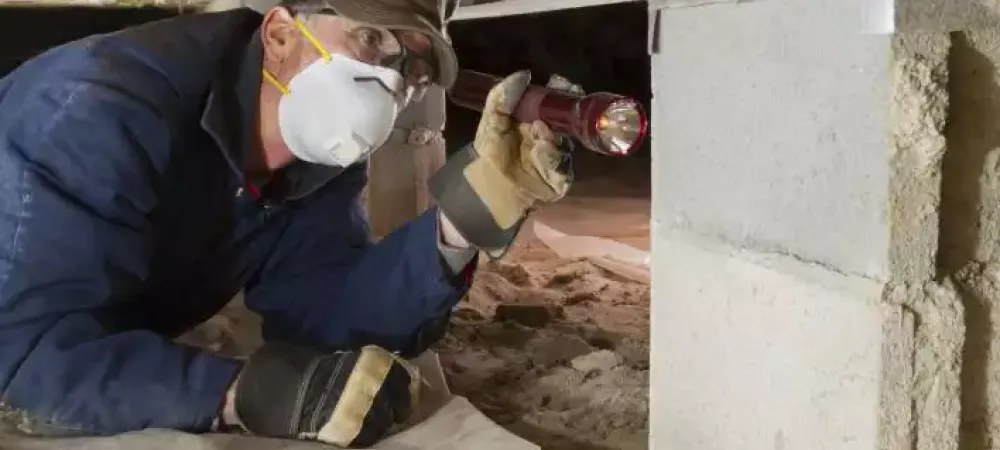
Seven signs show up first in the basement, attic, and crawl space, and each one points to a specific pest: droppings, shredded nests, mud tubes, sawdust piles, discarded wings, damp wood, and clustered flies. These are the three spaces people visit least, so problems there often grow for months before anyone notices. A 20-minute walkthrough with a flashlight twice a year catches most of them while they are still small and cheap to fix.
What do the seven signs point to?
Each early sign points to a specific pest and a specific first move. The table gives the pest, where to look, and what to do first.
| Sign | Likely pest | Where to look | First move |
|---|---|---|---|
| Droppings, gnaw marks, tracks | Mice | Along walls, behind boxes, near food | Seal gaps and set traps |
| Nests of shredded paper | Mice | Drawers, garages, behind stored boxes | Remove the nest, find the entry point |
| Mud tubes | Subterranean termites | Foundation walls, piers, joists, sill plates | Call for an inspection |
| Sawdust-like piles under small holes | Carpenter ants | Beams, sills, and wood near moisture | Find and fix the moisture, then call |
| Discarded wings | Termite or ant swarmers | Windowsills, light fixtures | Save a sample and check wing length |
| Damp, soft, or stained wood | Moisture that attracts several pests | Under bathrooms, around windows, near leaks | Repair the leak and replace damaged wood |
| Clusters of slow flies at windows | Cluster flies | Attic and south-facing windows | Vacuum, then seal entry points in late summer |
1. Droppings, gnaw marks, and tracks
Droppings, fresh gnaw marks, and tracks show where mice are active. UC IPM lists these as the main signs of a house mouse infestation, and notes that mice are most active at night. Look along walls, behind stored boxes, and near any food. Mice can fit through openings a quarter inch wide, so sealing is the long-term fix.
2. Nests of shredded paper or fiber
Nests made of finely shredded paper or other fibrous material mean mice are living in the space. UC IPM suggests searching behind boxes, in drawers, in garages, and around woodpiles. A nest in a storage area is a sign to clear the clutter and check the walls for entry points.
3. Mud tubes on the foundation
Mud tubes on foundation walls and piers are the clearest visible sign of subterranean termites. Penn State Extension notes that tubes show up on cellar walls, wooden posts, studs, and mudsills. Tubes can also act as swarming exits for winged termites. Finding one calls for a professional inspection, since the tubes seen may not be the only entry points.
4. Sawdust-like piles under small holes
Piles of sawdust-like debris under small holes point to carpenter ants. Penn State's Steven Jacobs notes that carpenter ants do not feed on wood and instead push the excavated particles out of the nest. The key detail is moisture, because carpenter ants usually pass over sound, dry wood. A pile near a damp sill is a signal to fix the leak first.
5. Discarded wings near windows and lights
Discarded wings on a sill or beneath a light fixture show that winged insects swarmed indoors. Termite swarmers have wings of equal length, while carpenter ant swarmers have front wings clearly longer than the hind pair. Our guide to early signs of a pest infestation covers how to tell what you are looking at.
6. Damp, soft, or stained wood
Damp or soft wood invites termites, carpenter ants, and roaches alike. Penn State's Jacobs recommends replacing water-damaged or decaying wood and correcting moisture problems, since carpenter ants rarely infest wood that is sound and dry. Check under bathrooms, around windows, and near plumbing in the crawl space.
7. Clusters of slow flies at windows
Large, slow flies collecting at attic or south-facing windows are usually cluster flies. Penn State Extension states they overwinter in wall voids and attics, then wake on warm days and head for the light. Vacuum them, then seal exterior gaps in late summer so next year's group stays out.
When should you call a professional?
Call a professional when you find mud tubes, repeated droppings after sealing, or sawdust piles that return. D-Bug Pest Control offers a free on-site termite inspection, and the termite control page explains the process. General pests are covered on the pest control page.
Frequently asked questions
How often should I check my basement and attic for pests?
Twice a year works for most homes, once in spring and once in late summer. A flashlight walkthrough of the basement, crawl space, and attic takes about 20 minutes and catches the signs listed above.
What does a mud tube look like?
A mud tube is a narrow tunnel of soil running up a foundation wall, pier, or joist. Penn State Extension notes that termites build these tubes as protected runways between the soil and the wood they feed on.
Are sawdust piles always carpenter ants?
Sawdust-like piles are a common sign of carpenter ants, though other insects can leave similar debris. Penn State's Steven Jacobs notes that carpenter ants dump excavated particles outside the nest, so a pile under a small hole is a strong clue.
Do flies in the attic mean the house is dirty?
Flies in the attic do not mean the house is dirty. Penn State Extension explains that cluster flies seek protected spots to spend winter, and they get in through cracks around siding, windows, and fascia.
Found one of these signs and not sure what it means? Call D-Bug Pest Control at 724-209-4758 and we'll help you figure out the right next step.
Call 724-209-4758