
Common Household Pests in Pittsburgh, Pennsylvania
Need Same Day Service? We Can Help.
Call Us Now at 412-387-7282.
Pittsburgh's mix of older housing stock, humid summers, and cold winters brings a consistent lineup of household pests: carpenter ants, stink bugs, spiders, rodents, and cockroaches, with each one driven by different seasonal conditions and requiring a different fix.
Carpenter Ants
Carpenter ants tunnel through wood to build nests rather than eating it, and they target wood that's already softened by moisture, like a leaky window frame or damaged roof flashing. They're reddish-black to black and noticeably larger than most other household ants. Sightings indoors at night, or piles of fine sawdust called frass near baseboards, are the clearest signs of an indoor nest. Fixing the moisture source that softened the wood matters more than surface treatment on visible ants — see our full carpenter ant guide for identification details.
Stink Bugs
The brown marmorated stink bug is common throughout Western Pennsylvania and becomes most noticeable in fall, when adults look for cracks around windows, doors, and siding to spend the winter indoors. They don't bite, sting, or reproduce indoors, but they release a strong odor when crushed or disturbed. Sealing exterior gaps before fall is more effective than dealing with them once they're already inside for the winter.
Spiders
Most spiders found in Pittsburgh homes, including common house spiders and cellar spiders, are harmless and actually help control other insect populations. Basements and crawl spaces concentrate spiders because of the moisture and insect activity those areas provide. A noticeable increase in spider activity is usually a sign of an underlying insect problem worth investigating, since spiders follow their food source indoors.
Rodents (Mice and Rats)
Mice and rats both enter homes seeking food, water, and shelter, especially as outdoor temperatures drop in fall. Mice are smaller with thin, hairy tails, while rats are larger with thicker, mostly hairless tails and larger droppings. Both can squeeze through surprisingly small gaps: a mouse through a dime-sized opening, a rat through a quarter-sized one. Sealing exterior gaps and securing food sources are the first steps regardless of which one is present.
Cockroaches
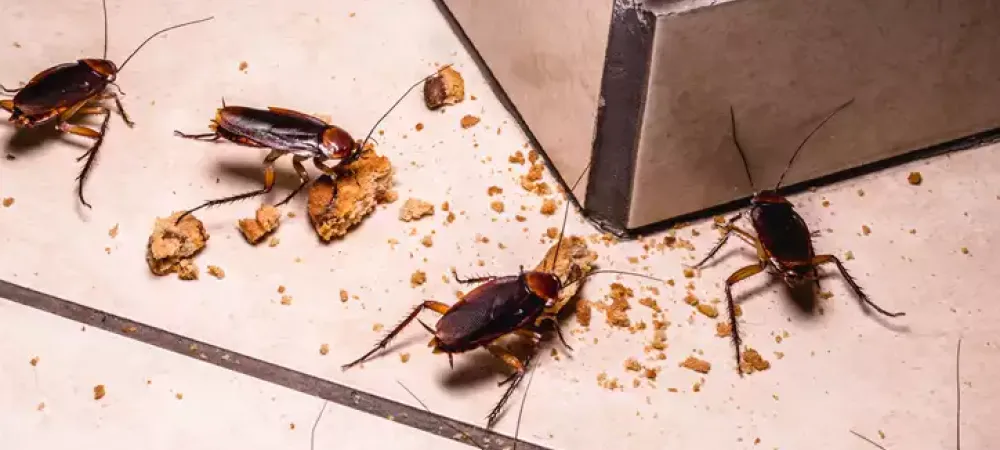
Cockroaches in Pittsburgh homes are drawn primarily by moisture, not dirt. A single unaddressed leak under a sink or around a water heater can sustain a population even in an otherwise clean home. The EPA identifies cockroach allergens as a significant asthma trigger, which makes moisture control and sealing entry points a health matter, not just a nuisance issue.
Termites
Eastern subterranean termites are active in the Pittsburgh area and cause damage that's easy to miss because it happens inside walls and support structures rather than on visible surfaces. Mud tubes running along a foundation and swarms of winged termites in spring are the two most reliable visible signs. Termites are frequently confused with flying ants; termites have a straight, uniform body and equal-length wings, while flying ants have a pinched waist and unequal wing lengths.
Myth: a clean home won't get pests. Sanitation reduces food access for some pests, but moisture, structural gaps, and seasonal weather pressure are the bigger drivers for most of the pests on this list. A well-kept home with one unsealed gap or one slow leak can still support an active infestation.
What Actually Prevents Most of These Pests at Once
- Seal visible gaps around windows, doors, utility lines, and foundation cracks, which addresses ant, stink bug, and rodent entry points at the same time
- Fix leaks promptly, since moisture is the shared driver behind cockroaches, carpenter ants, and increased spider activity
- Keep firewood, mulch, and dense vegetation a few feet clear of the foundation, removing shelter for ants, spiders, and rodents alike
- Address gutter and roof drainage issues before fall, which reduces the wood moisture that draws carpenter ants and termites
When It's Time to Call a Professional
DIY sprays and traps can manage small, isolated sightings, but repeated activity in the same area, any sign of a nest (frass, mud tubes, droppings in multiple rooms), or a pest showing up in an unusual location, like carpenter ants two floors up from ground level, usually means the source hasn't been found yet. A full inspection identifies the actual entry points and nest locations that DIY treatment typically misses.
Pittsburgh Household Pests: Frequently Asked Questions
What's the most common pest complaint in Pittsburgh specifically?
Stink bugs and carpenter ants are consistently among the most common seasonal complaints in the Pittsburgh area, driven by the region's mix of older housing stock and wooded surrounding terrain that both pests use to move toward homes.
Are Pittsburgh's older homes actually more pest-prone?
Yes, generally. Older construction has more settling gaps around foundations and window frames, aging plumbing with a higher chance of small leaks, and in many cases wood-to-soil contact that newer construction codes have moved away from. All of these increase entry points and moisture access for common pests.
Does winter mean pest activity stops?
No. Cold weather pushes rodents, stink bugs, and some spiders indoors seeking warmth rather than eliminating them. Indoor pest activity often increases in early winter even as outdoor activity drops.
Can one pest problem indicate another is likely?
Yes. Increased spider activity often signals an underlying insect population spiders are feeding on, and carpenter ant sightings often point to a moisture problem that could also support termites or wood rot if left unaddressed.
Dealing with any of these in your Pittsburgh-area home, or just not sure what you're looking at? Call D-Bug Pest Control at 412-387-7282 and we'll help you figure out the right next step.
Call 412-387-7282