
5 Fall Invaders in Columbus Homes: Stink Bugs, Lady Beetles, and More
Need Same Day Service? We Can Help.
Call Us Now at 614-532-9149.
Five fall invaders turn up in Columbus homes each autumn: brown marmorated stink bugs, multicolored Asian lady beetles, boxelder bugs, western conifer seed bugs, and funnel weaver spiders. Ohio State University Extension says sealing the openings they use matters more than traps, because indoor traps should not replace sealing the gaps that let them in. These are nuisance pests rather than structural ones, and the prevention steps overlap for all five.
How do the five fall invaders compare?
The five fall invaders differ in appearance and in how they get in, but all of them are looking for a sheltered place to wait out winter. This table sets them side by side.
| Invader | How to recognize it | Where it gathers | What helps |
|---|---|---|---|
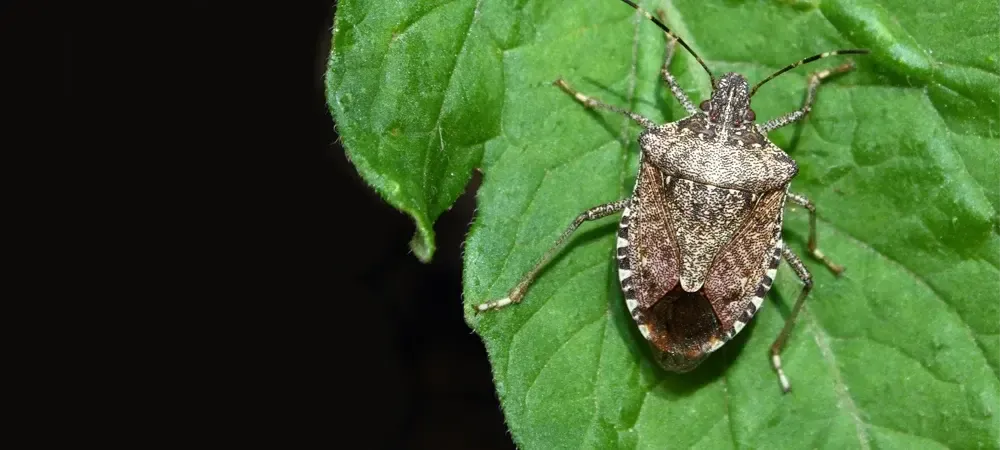
| Brown marmorated stink bug | Shield-shaped brown bug that gives off a strong odor when crushed | Sunny exterior walls, then gaps into attics | Seal gaps and vacuum. Indoor stink bug traps are a backup. |
| Multicolored Asian lady beetle | Slightly larger than native lady beetles, tan to orange to red | Sunny south and southwest walls | Seal gaps and vacuum. No effective trap exists. |
| Boxelder bug | Black with red markings | Sunny walls and boxelder trees | Seal gaps. No effective trap exists. |
| Western conifer seed bug | Brown bug with flattened, leaf-shaped back legs, sometimes mistaken for a stink bug | Warm exterior walls and entry gaps | Seal gaps. No effective trap exists. |
| Funnel weaver spider | Fast, brown spider, usually a male wandering indoors in fall | Floors and corners near doors | Vacuum or use a cup, and seal gaps. |
1. Brown marmorated stink bug
The brown marmorated stink bug is the most notorious fall invader in Ohio, and it enters through gaps that sit high on a house. Ohio State's BYGL team notes that stink bugs and lady beetles commonly crawl upward after landing on an outside wall, so gaps at loose soffits give them a route into the attic. Crushed stink bugs release a lingering odor, which is why a vacuum is the better indoor tool. Effective indoor traps for stink bugs exist, though Ohio State describes them as a backup to sealing.
2. Multicolored Asian lady beetle
The multicolored Asian lady beetle is slightly larger than a native lady beetle and varies in color from tan to orange to red. In Ohio it typically begins looking for overwintering sites in mid to late October, and when one lands, many others follow. The University of Vermont Extension notes that these beetles gather on sunny south and southwest sides of houses and can enter homes from September through April. Crushing them leaves a stain and an odor, so vacuum them instead.
3. Boxelder bug
The boxelder bug is a red and black insect that gathers in large numbers on sunny walls and boxelder trees in early fall. It slips inside mostly through cracks and crevices rather than open doors. Removing a nearby boxelder tree may reduce numbers, though the University of Vermont notes the bugs can fly up to two miles, so a neighbor's tree can still feed the problem. No effective trap exists for boxelder bugs, which leaves sealing as the main defense.
4. Western conifer seed bug
The western conifer seed bug is a brown, leaf-footed bug that is often mistaken for a stink bug. It arrives with the same cool weather and uses the same gaps around windows, doors, and soffits. It is a nuisance rather than a threat to the home. No effective trap exists for leaf-footed bugs, so the answer is sealing and a vacuum.
5. Funnel weaver spiders
Funnel weaver spiders appear indoors in fall mostly because males go looking for mates. Ohio State's BYGL team reports that male funnel weavers searching for females often wander into houses in autumn. A vacuum or a cup and a card handles the occasional visitor, and the same sealing steps that keep out insects keep out wandering spiders.
When do fall invaders show up, and when should you seal?
Fall invaders start gathering in September, so sealing should be finished by then. Boxelder bugs often cluster on tree trunks and sunny walls during the first cold snaps of early fall, according to Ohio State's fall invader alert. Asian lady beetles in Ohio typically begin searching for winter shelter in mid to late October, and warm, sunny afternoons draw boxelder bugs and lady beetles to south-facing siding. Sealing before the first arrivals is simpler than chasing insects that have already found a way into the walls.
How do you keep fall invaders out of a Columbus home?
Fall invaders stay out of a home when the gaps they use are sealed before October. Ohio State's BYGL team points to the same weak spots again and again, and a walk around the outside of the house covers them:
- Loose soffits and fascia, which lead into attics
- Gaps in siding, trim, and where utility lines enter the wall
- Worn weatherstripping and door sweeps
- Torn window and vent screens
- Cracks around window frames
Seal what you find with caulk or the appropriate material, repair screens, and replace worn weatherstripping. A vacuum handles the insects already inside, and it avoids the odor that crushing creates.
When should you call a professional?
A professional is worth calling when fall invaders return every year despite sealing, or when gaps sit out of reach on a second story. D-Bug Pest Control lists boxelder bugs and stink bugs among the pests its general pest control plan covers, and the plans include recurring outdoor treatments. The general pest control page describes the plans, and homeowners in Gahanna can review local details on the pest control page for Gahanna.
Bugs piling up on your windows every October? Call D-Bug Pest Control at 614-532-9149 and we'll help you figure out the right next step.
Call 614-532-9149