
Termites Around Morgantown: How to Spot Them Early and Keep Them Out
Need Same Day Service? We Can Help.
Call Us Now at 304-362-9343.
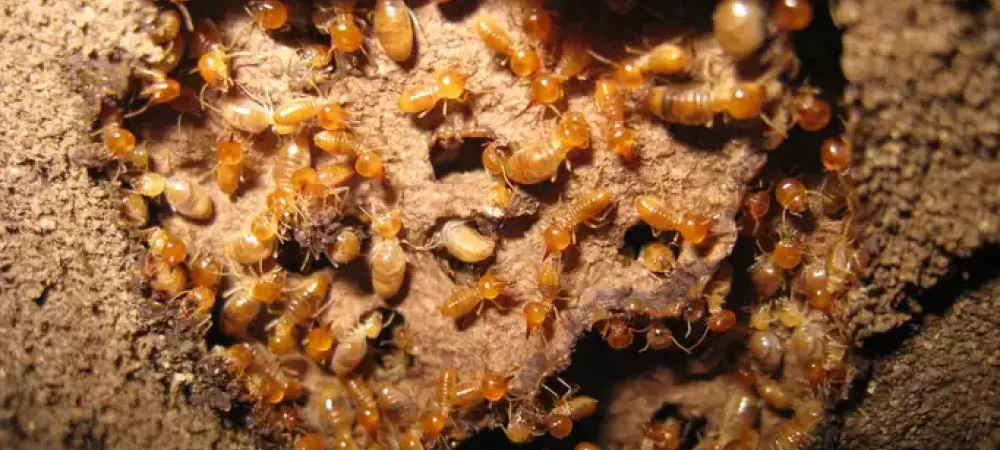
The early signs of termites around a Morgantown-area home are mud tubes on foundation walls, discarded wings near windows, and wood that sounds or feels hollow when probed. Termites rarely show themselves, so the signs are what homeowners can find, and a short spring check catches most of them. Prevention comes down to two things termites need: moisture and easy access from soil to wood.
What are the early signs of termites in a home?
Mud tubes, swarmers or their discarded wings, and damaged wood are the early signs. The table lists what each one looks like and where to check.
| Sign | What it looks like | Where to check |
|---|---|---|
| Mud tubes | Narrow tunnels of soil running up a surface | Foundation walls, piers, crawl space walls, joists |
| Swarmers or discarded wings | Winged insects, or piles of wings of equal length | Windowsills, door frames, light fixtures |
| Damaged wood | Wood that sounds hollow or breaks apart when probed | Sill plates, floor joists, door and window trim |
Penn State Extension notes that tubes show up on cellar walls, posts, studs, mudsills, and door and window trim, and advises probing wood in suspect areas for soundness. The Rutgers fact sheet on termites adds that active tubes are darker, with moist soil and live termites, while old tubes are drier.
When do termites swarm around Morgantown?
Eastern subterranean termites swarm in spring, and the window can stretch into early summer. Penn State Extension reports swarms in late winter or early spring in Pennsylvania, and the Ohio State University Plant Pest Diagnostic Clinic reports that eastern subterranean termites in Ohio swarm over spring and early summer. For a West Virginia homeowner, late winter through early summer is the period to watch for winged insects and discarded wings indoors.
How do you tell a termite swarmer from a flying ant?
A termite swarmer has a broad waist, straight antennae, and four wings of equal length. A flying ant has a pinched waist, elbowed antennae, and front wings longer than the hind wings. An Extension specialist describing how to tell ants from termites lists antennae, waist, and wing length as the three reliable checks.
What prevents termites around a home?
Termite prevention starts with keeping wood away from soil and keeping moisture away from the foundation. The Rutgers fact sheet advises keeping structural wood at least six inches above the soil and repairing leaks promptly, and it warns against burying wood debris such as stumps or branches when building. NC State Extension adds that direct contact between soil, mulch, or leaves and any wooden part of the house or siding gives termites an easy entry point. A weekend walk around the property covers the essentials:
- Pull mulch and leaf litter back from siding and foundation wood
- Fix leaking gutters and downspouts so water drains away from the house
- Keep firewood and lumber off the ground and away from the walls
- Remove old stumps, scrap wood, and buried debris near the foundation
- Repaint or seal exterior wood near the ground
Does knocking down a mud tube solve the problem?
Knocking down a mud tube does not solve the problem. Mississippi State University Extension notes that destroying tubes does not control the termites, since the colony stays in the ground and finds another route. The tubes you can see may also be only some of the entry points. Photograph the tubes and call for an inspection instead.
What does professional termite protection look like?
Professional protection starts with a free inspection and continues with monitoring. D-Bug Pest Control begins with a free on-site inspection of the accessible and visible areas of the property, talks through any signs of activity you have noticed, and builds a plan from what it finds. Sentricon bait stations can typically be installed the same day you approve the plan, and the stations are checked once a year and rebaited as needed. The termite control page lays out the process, and homeowners in Fairmont can review local details on the termite control page for Fairmont. Our guide to termite warning signs adds a few more to watch for.
Frequently asked questions
What is the first sign of termites in a house?
The first sign of termites is usually a mud tube on a foundation wall or pier, or discarded wings near a window. Penn State Extension lists tubes on cellar walls, posts, studs, and mudsills as the most visible evidence.
How far above the ground should wood be to prevent termites?
Structural wood should be at least six inches above the soil, according to the Rutgers fact sheet on termites. Wood in contact with soil gives termites an easy path, so siding and framing should clear the ground by that margin.
Should I knock down mud tubes I find?
Do not rely on knocking them down. Mississippi State University Extension notes that destroying tubes does not control termites, because the colony is in the ground and builds new routes. Call for an inspection instead.
How often should termite protection be checked?
Protection should be checked at least once a year. D-Bug Pest Control returns once a year to check each Sentricon station, rebait as needed, and inspect the interior on request.
Seeing mud tubes or discarded wings and not sure what they mean? Call D-Bug Pest Control at 304-362-9343 and we'll help you figure out the right next step.
Call 304-362-9343